AI SEO services: found by Google, quoted by ChatGPT.
Your buyers now ask an AI before they search, and the AI answers with whoever it can read and trust, which is often not the best supplier, just the most legible one. We check which sites it quotes for the questions you should own, work out why yours isn't among them and fix that, at fixed prices, with one client chart to show for it and our own site as the second.
By Evdokiia Petrovskaia, Director, Dubir GroupPrices and copy checked
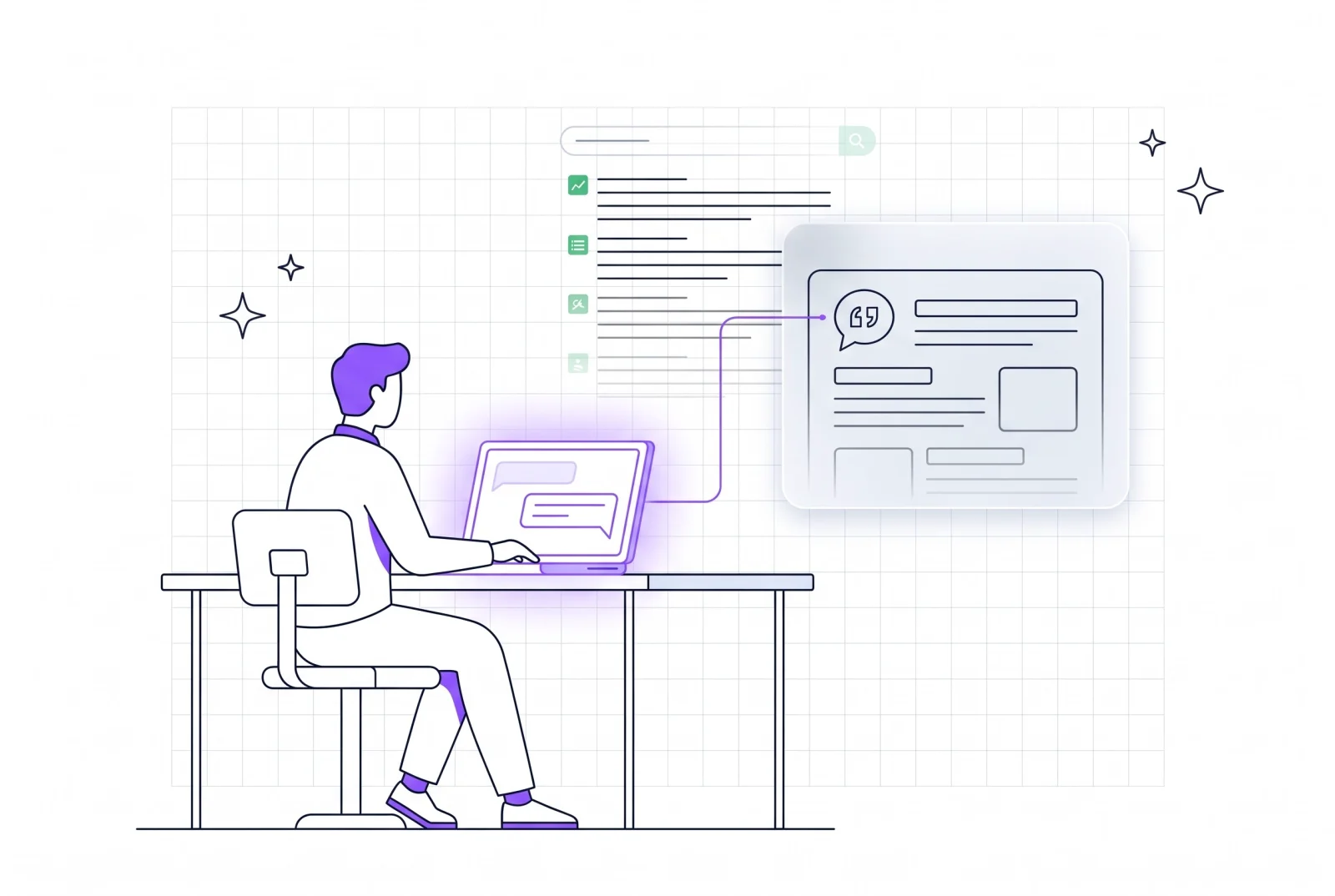
AI visibilityis how often an AI answer engine, ChatGPT, Perplexity, Google AI Overviews, Gemini, Claude, Copilot or Grok, names or cites your business when someone asks a question you should be the answer to. You earn it the same way you earn a classic ranking, with pages the engines can fetch, read, trust and quote, and there's no trick or separate file that buys it. The work goes by a few names, AI SEO, generative engine optimization or GEO, answer engine optimization, and it's the same checklist under each of them, one most sites we look at fail half of.
What the engines do with your site
Google's AI Overviews and AI Mode pick their sources from the ordinary index, so a page that doesn't rank doesn't get quoted, and Google published a guide in May 2026 saying exactly that, along with a warning against "chunking" pages or writing separate copy for AI. ChatGPT, Perplexity and Claude behave differently, they fetch a page live when a question comes in, parse the text and the structured data, and prefer passages that answer the question outright with a number and a source. They also cite pages about you, on review sites, forums and Wikipedia, more often than your own, and Semrush's study of 126 million prompts found the sources vary by engine and by prompt, which is why we test four engines and not one.
The Princeton GEO paper, the one peer-reviewed study of what moves a citation, measured it, adding cited sources raised visibility in generative answers by about 40%, adding statistics by about 37%, and keyword stuffing lowered it by 10%. Those are the levers, none of them is a hack, and every one of them is something a person reading the page wants as well.
Which engines, and where each one looks
People say "ChatGPT" and mean all of them, so here's the list we work against and where each one gets its sources, because that decides what's worth fixing. Google is on the list twice and it's not a typo, AI Overviews sit inside the results page and AI Mode is the tab next to it, and both are fed by the same index as the ten blue links, which is the whole reason GEO without SEO is a slogan.
| Engine | Where its answers come from | What that means for your site |
|---|---|---|
| Google AI Overviews and AI Mode | Google's own index and ranking, the same one classic search uses | Rank first, the rest follows. No special markup, Google says so itself. |
| Gemini | Google's index plus the Knowledge Graph | Your Organization has to be one entity everywhere, site, registry, Business Profile, LinkedIn. |
| ChatGPT | Bing's index plus OpenAI's own crawlers, OAI-SearchBot and ChatGPT-User, which fetch the page live | Be indexed in Bing, allow both bots, put the answer in the first paragraph. |
| Claude | Brave Search results, fetched live by Claude-SearchBot and Claude-User | Allow the bots, ship complete HTML, keep an llms.txt. |
| Perplexity | Its own index through PerplexityBot, and it always shows its sources | The friendliest to citations, rewards named authors and dated pages. |
| Microsoft Copilot | Bing | Bing Webmaster Tools verified, IndexNow on every deploy. |
| Grok | Posts on X, plus web search | The one engine where being talked about on X counts. |
| Meta AI, Mistral Le Chat, Qwen, DeepSeek | Web search through third-party indexes, mostly Bing and Google derived | If Google and Bing can read you, these can. Allow the Meta and Mistral fetchers by name. |
| Codex, Claude Code and other coding agents | Fetch pages and docs directly when a developer asks about a product | Markdown twins and llms.txt get read as-is. This is where those files earn their keep. |
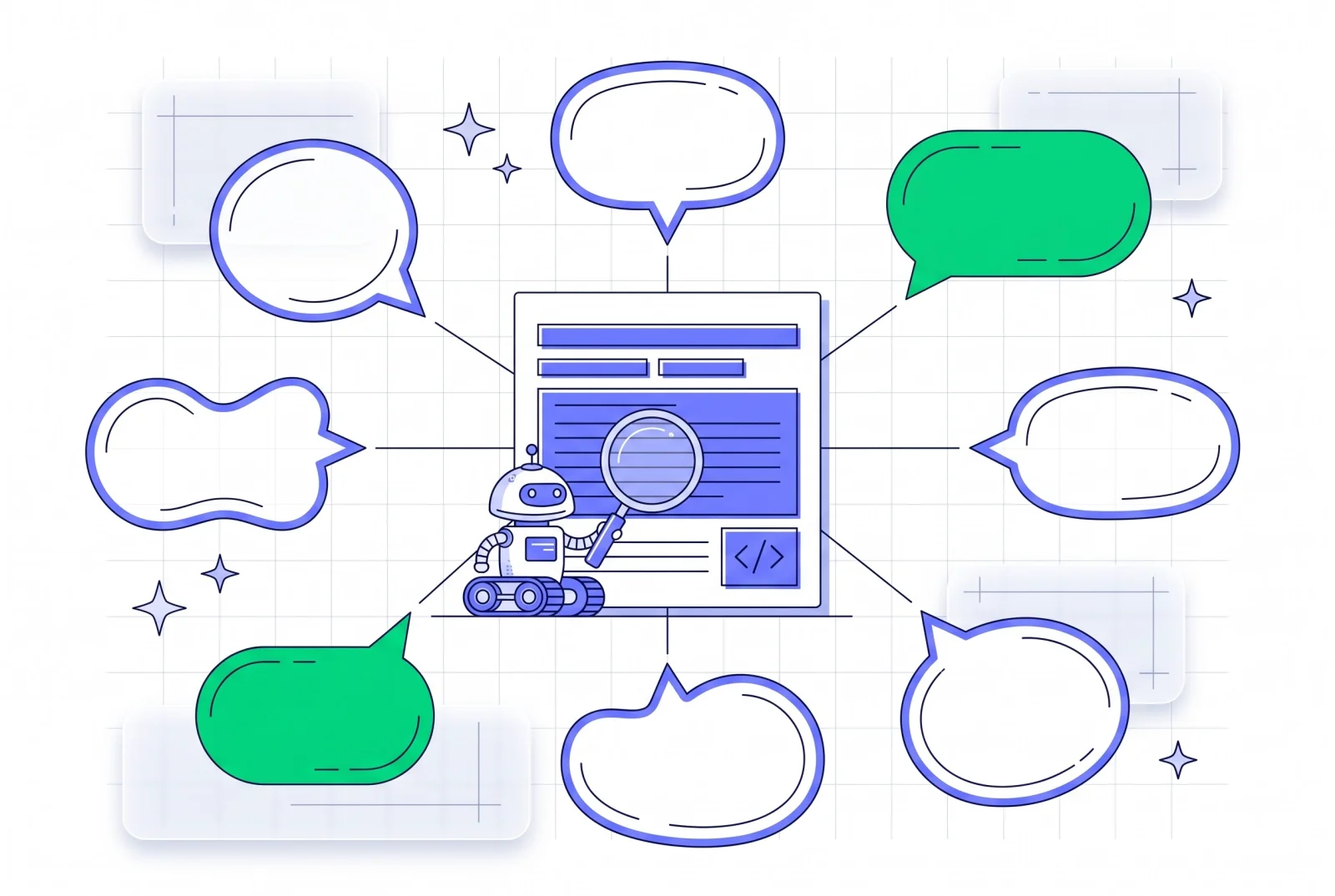
The audit
Five working days, one fixed price, three questions.
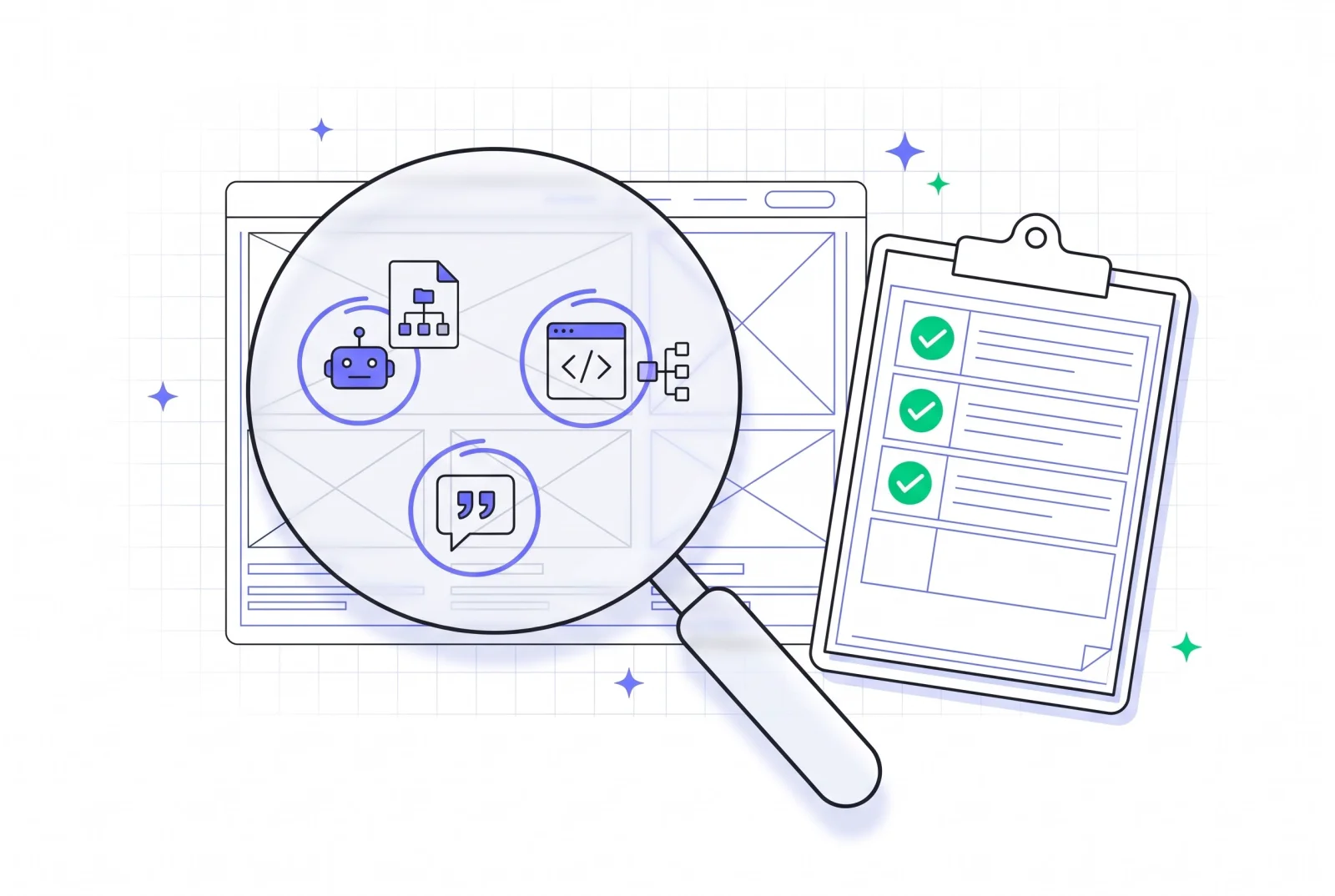
- Can they read you? We fetch your site the way each crawler does and look for blocked bots in robots.txt, pages that are blank until JavaScript runs, missing or wrong structured data, no llms.txt, slow responses, and pages Search Console says are discovered but not indexed.
- Do they trust you? One Organization, described the same way on your site, your Google Business Profile, LinkedIn and the company registry and linked together with sameAs, with named authors and checked dates on every page that makes a claim. This is the part most small companies skip, and the part the engines weight most.
- Do they quote you? Twenty prompts your buyers actually ask, run through ChatGPT, Perplexity, Google AI Overviews and Claude, and for each one who is cited, on what page, and what that page has that yours doesn't. You get the sheet and the screenshots, and we rerun it after the fixes.
The report is a ranked list. Things you can fix in an afternoon come first and are marked as such, we'd rather you did those yourself than paid us for them.
What we build and fix
- Server-rendered pages, complete HTML before any script, so every crawler and every answer engine reads what a person reads.
- Structured data that matches the page, Organization, Person, Article, Product, FAQPage, BreadcrumbList, and the domain type that fits your catalogue, MolecularEntity for compounds, Product for parts, SoftwareApplication for tools.
- Machine-readable twins, an llms.txt that describes the site in plain text, markdown versions of the pages that matter served by content negotiation, and pricing an agent can read without filling in a form.
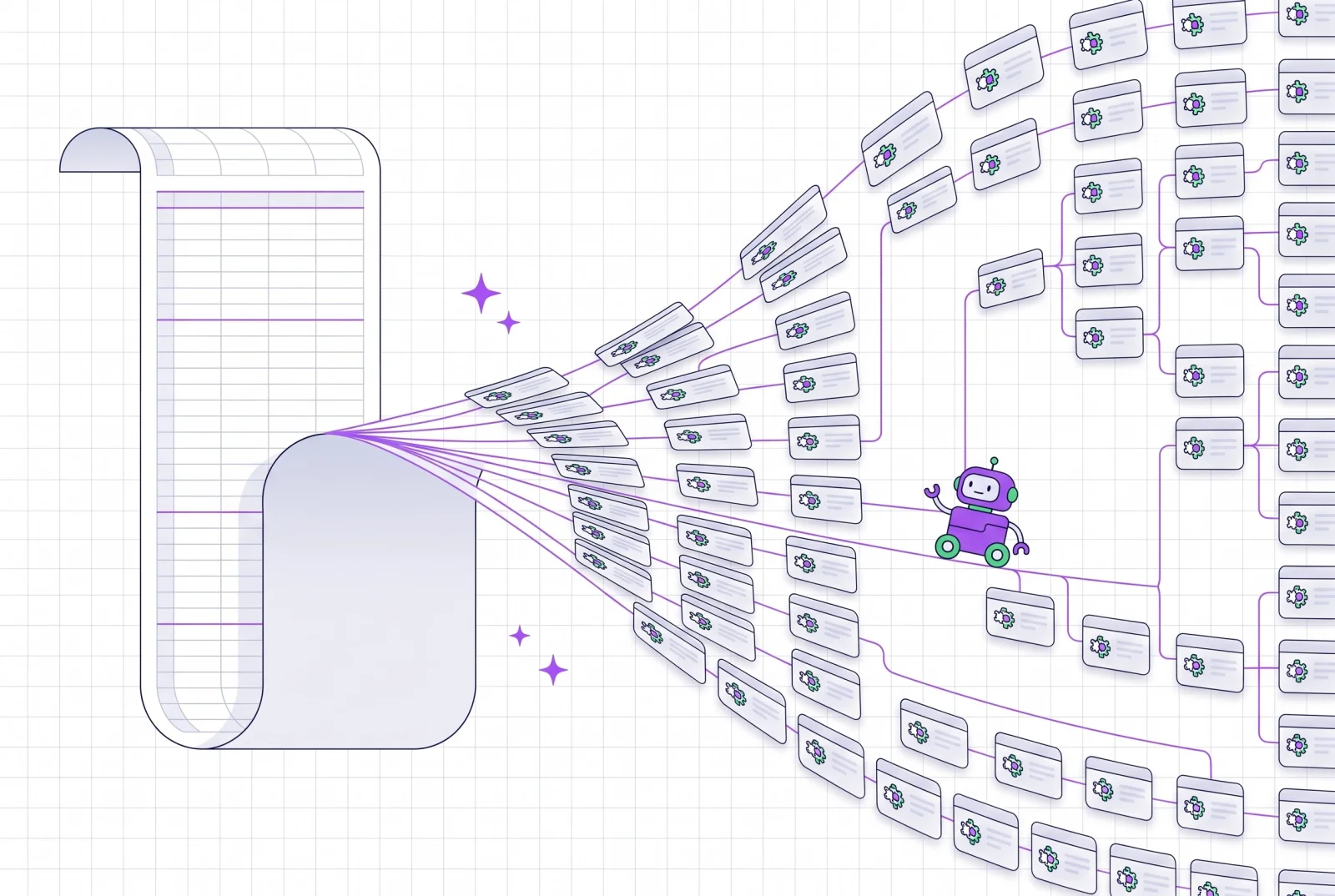
- Catalogues at scale, one page per item with the identifiers buyers type in the text and in JSON-LD and sitemaps for all of it. This is the build behind the Vitas-M numbers below.
- Content the engines cite, comparison pages, guides with sourced numbers, calculators that answer one question well. About a third of AI citations go to comparison articles, and the calculator and guide cluster on this site is the same play run on ourselves.
- Entity work off-site, registry, Business Profile, LinkedIn, directories, Wikidata where it's warranted. Unglamorous, and where a third of the citations come from.
Proof: a chart, and our own site
VITAS-M Laboratory, a chemical supplier with a 1.4 million compound catalogue and no search presence, went live on a site we built in August 2026, and Search Console went from the first impression on 16 August 2026 to 2,458 impressions in a day on 9 September 2026, with 957pages appearing in results. The queries are SMILES strings and IUPAC names, so the people seeing them are chemists. The dip in the second week of September is real and we left it in, the case study explains it, has the week-by-week table and says what we're doing next.
The second proof is this site. dubir.net ships everything in the list above and you can fetch it, /llms.txt, a markdown twin of the product pages if you request Accept: text/markdown, JSON-LD on every route, nineteen AI crawlers allowed by name in /robots.txt, and a named author with a checked date on every calculator and guide. We sell what we run.
Packages
| Package | Price | Time | What you get |
|---|---|---|---|
| AI visibility audit | €1,200 fixed | 5 working days | Twenty prompts your buyers ask, run through ChatGPT, Perplexity, Google AI Overviews and Claude, with who gets cited and why, a crawl of your site as the engines see it, and a ranked list of fixes with the ones you can do yourself marked. |
| Catalogue site and programmatic SEO | from €3,500 | 3 to 4 weeks | One page per item in your catalogue with the identifiers buyers search for in the text and in structured data, sitemaps for all of it, and a site that renders before any script runs. The build behind the Vitas-M chart. The price rises with data cleaning, not with page count. |
| Fixes and content, monthly | quoted after the audit | month by month | The audit's list, worked through. Technical fixes, the guides and comparison pages the engines cite, entity work off-site. Cancel any month. |
Prices exclude VAT. Fixed means fixed, if the audit takes us eight days that's our problem. The catalogue build is quoted after we've seen the data, because the cost is in cleaning it and not in the number of pages.
What we won't do
- Promise a ranking or a citation. The engines don't sell those and neither do we.
- Write separate content for AI. Google names that as spam, and the other engines quote the same pages people read.
- Sell you an AI visibility dashboard before there's anything to track. The audit's prompt sheet is the dashboard until the numbers justify a paid one.
Questions, answered
What is AI visibility?
AI visibility is how often an AI answer engine such as ChatGPT, Perplexity, Google AI Overviews, Gemini, Claude or Copilot names or cites your business when someone asks a question you should be the answer to. You earn it the same way you earn a classic ranking, with pages the engines can fetch, read, trust and quote, there's no separate trick.
Is AI SEO different from normal SEO?
Mostly no, and Google says so in its own guide, there's no special markup or file that gets a page into AI Overviews and writing separate content for AI risks its spam policy. The differences are on the other engines. ChatGPT, Perplexity and Claude fetch pages live, prefer text that answers the question in the first paragraph, read structured data and llms.txt, and cite third-party pages about you more than your own, so the work is classic SEO done properly plus extractable structure and some off-site presence.
Can you guarantee we'll show up in ChatGPT?
No, and nobody honest can. The engines don't publish a citation report, their answers change between runs, and a third of citations go to pages that aren't the brand's own. What we can do is measure a fixed set of prompts before and after, show you the screenshots, and remove every reason an engine has for not quoting you.
What do you check in the audit?
Three things. Whether the engines can read you, so robots.txt, JavaScript rendering, structured data, llms.txt, page speed and the indexing status in Search Console. Whether they trust you, which comes down to one consistent Organization across your site, Google Business Profile, LinkedIn and the registries, with named authors and dates on anything that makes a claim. And whether they quote you, twenty prompts across four engines with who's cited today and what those pages have that yours don't.
Do you do this for your own site?
Yes, and it's the cheapest way to check us. dubir.net serves an llms.txt, answers Accept: text/markdown requests with a markdown twin of the product pages, allows nineteen AI crawlers by name in robots.txt, carries JSON-LD on every page, and puts a named author and a checked date on every calculator and guide. Fetch any of those and compare with your own site.
We're in Cyprus. Does that matter?
Only for the local layer. A Cyprus company competing for Cyprus queries needs the Google Business Profile, the registry record and the local directories to agree with the website, and we know those well because we've done them for ourselves. The engines are the same everywhere, and most of our clients' buyers aren't in Cyprus anyway.
Ask ChatGPT about your category, then ask us why it said that
Fifteen minutes is enough to run three prompts together and say whether the audit is worth your money, sometimes it's one line in robots.txt and we'll tell you so.